Occupational hearing loss remains one of the most common work-related illnesses in the United States. Each year, approximately 22 million workers are exposed to hazardous noise levels at work, with over 30 million exposed to ototoxic chemicals that can compound hearing damage. For California manufacturers, aerospace facilities, and military maintenance operations, understanding Cal/OSHA hearing conservation requirements isn’t just about compliance, it’s about protecting your workforce’s long-term health and avoiding costly citations.
Understanding Hazardous Noise Exposure
Noise can be defined as any unwanted sound, but hazardous noise specifically refers to sound levels exceeding 85 decibels (dBA) as an 8-hour time-weighted average (TWA). A practical rule of thumb: if you must raise your voice to speak with someone three feet away, you’re likely exposed to hazardous noise levels.
As an Industrial Hygienist who spent nearly four years cumulative time on aircraft carriers during my Navy service, I can say with certainty that the flight deck of an actively launching carrier is the noisiest location I’ve ever experienced. During one memorable flight operations session, I stood within 20 feet of an EA-6B Prowler at full power, ready for catapult launch. Even wearing foam earplugs plus a cranial helmet with integrated earmuffs, the noise literally made my body vibrate. At levels exceeding 135 dBA, noise exposure occurs through bone conduction, and no amount of hearing protection can fully protect you at these extreme levels.
While most California facilities don’t launch fighter jets, manufacturing plants, aerospace operations, and military maintenance hangars face similar hearing conservation challenges that require systematic assessment and control.
When Does Cal/OSHA Require a Hearing Conservation Program?
California employers must implement a hearing conservation program when employee noise exposure equals or exceeds an 8-hour time-weighted average of 85 dBA. This 85 dBA threshold is Cal/OSHA’s “action level”—the point at which specific hearing conservation program elements become mandatory.
The Cal/OSHA permissible exposure limit (PEL) is 90 dBA as an 8-hour TWA. Exposures at or above this level require immediate implementation of engineering or administrative controls to reduce noise, in addition to the hearing conservation program.
Critical California-specific consideration: When employees work shifts longer than 8 hours, the action level actually decreases. For example, if workers regularly work 10-hour shifts instead of 8 hours, the hearing conservation action level drops to 83.4 dBA. For 12-hour shifts, it drops further to 82.0 dBA. This is calculated using OSHA’s 5-dB exchange rate and accounts for the increased exposure duration. Many California facilities miss this requirement when scheduling extended shifts.
Determining Your Facility’s Noise Exposure: The Workplace Noise Survey
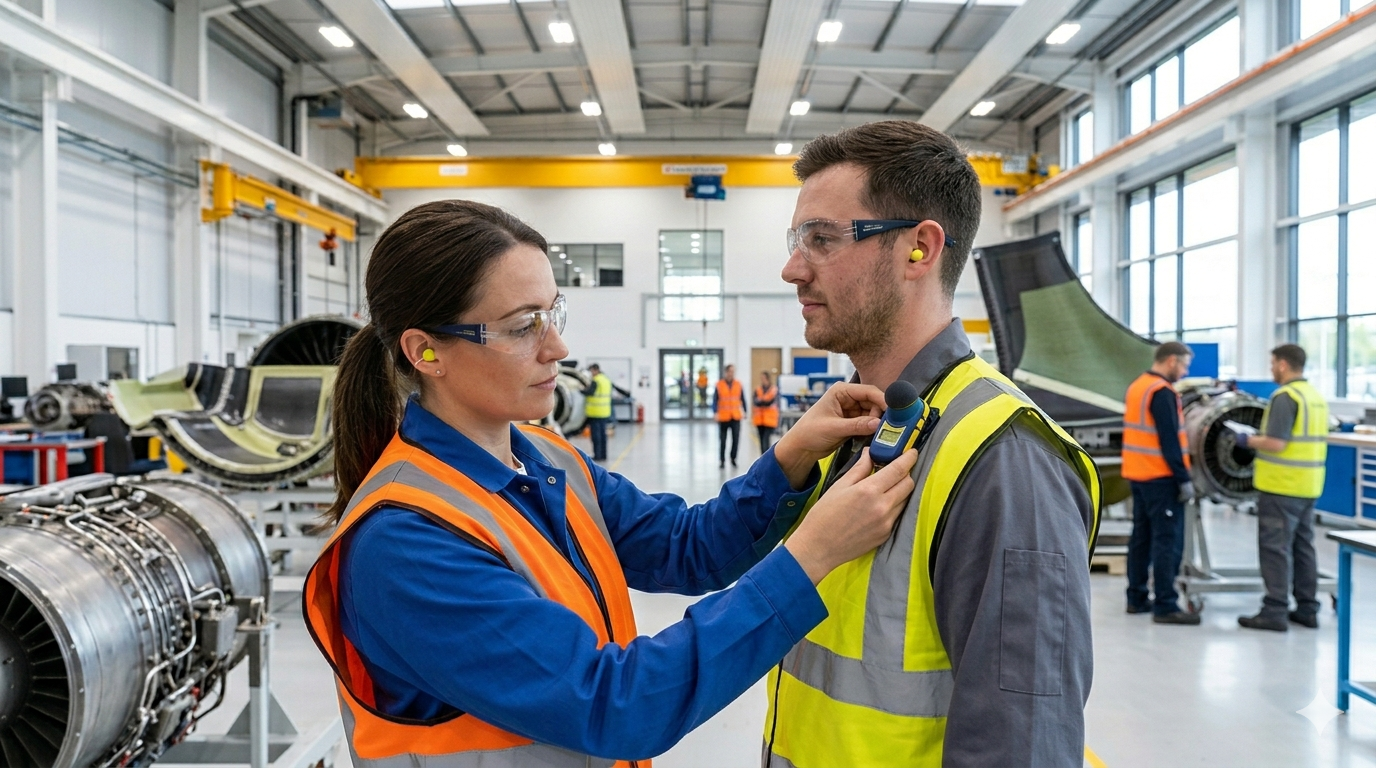
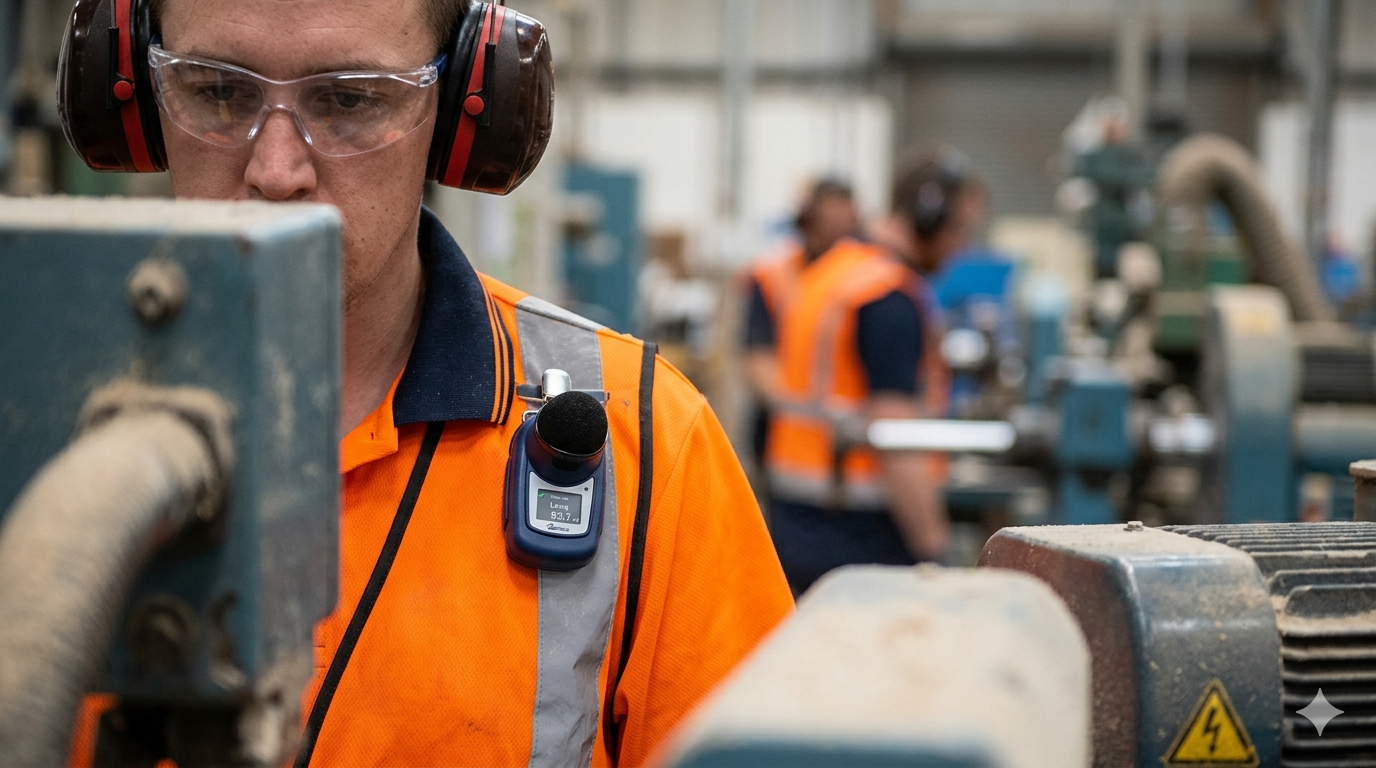
Before implementing a hearing conservation program, facilities need to determine actual employee noise exposures through a professional noise survey (also called a noise assessment, noise monitoring study, or noise dosimetry). California facilities sometimes refer to this as a sound study. Regardless of terminology, this involves measuring workplace sound levels using calibrated equipment and personal dosimeters worn by employees during their full work shift to establish accurate 8-hour time-weighted averages.
A proper noise assessment identifies which employees are exposed above the 85 dBA action level and require enrollment in the hearing conservation program. It also establishes baseline data for regulatory compliance and helps prioritize engineering controls or administrative measures to reduce noise exposure.
Common Noise Sources in Manufacturing, Aerospace, and Military Operations
Understanding typical noise levels in your industry helps identify where hearing conservation efforts should focus.
Manufacturing Operations
We recently conducted noise monitoring at a Southern California manufacturing facility where CNC operators run various precision lathes. The process involves machine setup (2-5 hours) and part runs (3-6 hours). During monitoring of an operator running a CNC lathe for 8 hours, we found:
- Setup operations: Generally quieter
- Cutting operations: Noise increases with deeper cuts or greater material removal
- Overall 8-hour TWA: Below 85 dBA for typical operations
- Ventilation system impact: Minimal (only 1-2 dBA difference when running)
This is common with modern CNC equipment—the noise levels often don’t trigger hearing conservation requirements. However, other manufacturing operations tell a different story:
- Metal grinding: 95-100 dBA (definitely requires HCP enrollment)
- Pneumatic impact wrenches: 95-102 dBA
- Metal stamping presses: 90-98 dBA
- Air-powered tools: 88-95 dBA
- Conveyor systems: 85-90 dBA (depends on load and speed)
Aerospace Manufacturing and Assembly
Aerospace facilities typically have more consistent high-noise operations:
- Pneumatic rivet guns: 93-98 dBA (even for short-duration use)
- Metal forming equipment: 90-95 dBA
- Sheet metal fabrication: 88-94 dBA
- Engine testing (ground run-ups): 110-130 dBA (extreme exposure, requires double hearing protection)
- Aircraft maintenance bays: 85-95 dBA (variable based on work performed)
Military Maintenance Operations
At a Southern California military aircraft maintenance facility, we conducted a preliminary noise assessment of a maintenance shop. The shop contained various aircraft maintenance equipment, hand tools, and compressed air systems. Initial area measurements ranged from 78-88 dBA, with peak exposures during compressed air use and power tool operation. Personal dosimetry would be required to determine individual employee exposures throughout their full shift, particularly for mechanics who rotate between different aircraft and maintenance tasks.
Military maintenance environments often involve intermittent high-noise tasks combined with moderate background noise, making spot measurements unreliable. Personal dosimetry provides the only accurate method to capture true 8-hour TWA exposures in these variable conditions.
Cal/OSHA Hearing Conservation Program Elements
Once your noise assessment confirms employee exposures at or above 85 dBA, Cal/OSHA Title 8 Sections 5095-5100 require implementation of a comprehensive hearing conservation program with the following elements:
Noise Monitoring (Section 5097)
Employers must conduct initial noise monitoring to identify employees exposed at or above the action level. Monitoring must be repeated whenever workplace changes might increase noise exposures. The monitoring must be sufficient to identify employees requiring inclusion in the program and to select appropriate hearing protection.
Audiometric Testing (Section 5100)
Employees exposed at or above the action level must receive baseline audiograms within 6 months of first exposure (or within one year if mobile testing is used, with hearing protection provided during the interim). Annual audiograms are required thereafter to detect any standard threshold shift (STS), defined as an average change of 10 dB or more at 2000, 3000, and 4000 Hz in either ear.
California requires age correction when determining whether an STS has occurred, and specific follow-up procedures when shifts are detected, including retraining, refitting hearing protection, and referral for medical evaluation if necessary.
Hearing Protection (Section 5098)
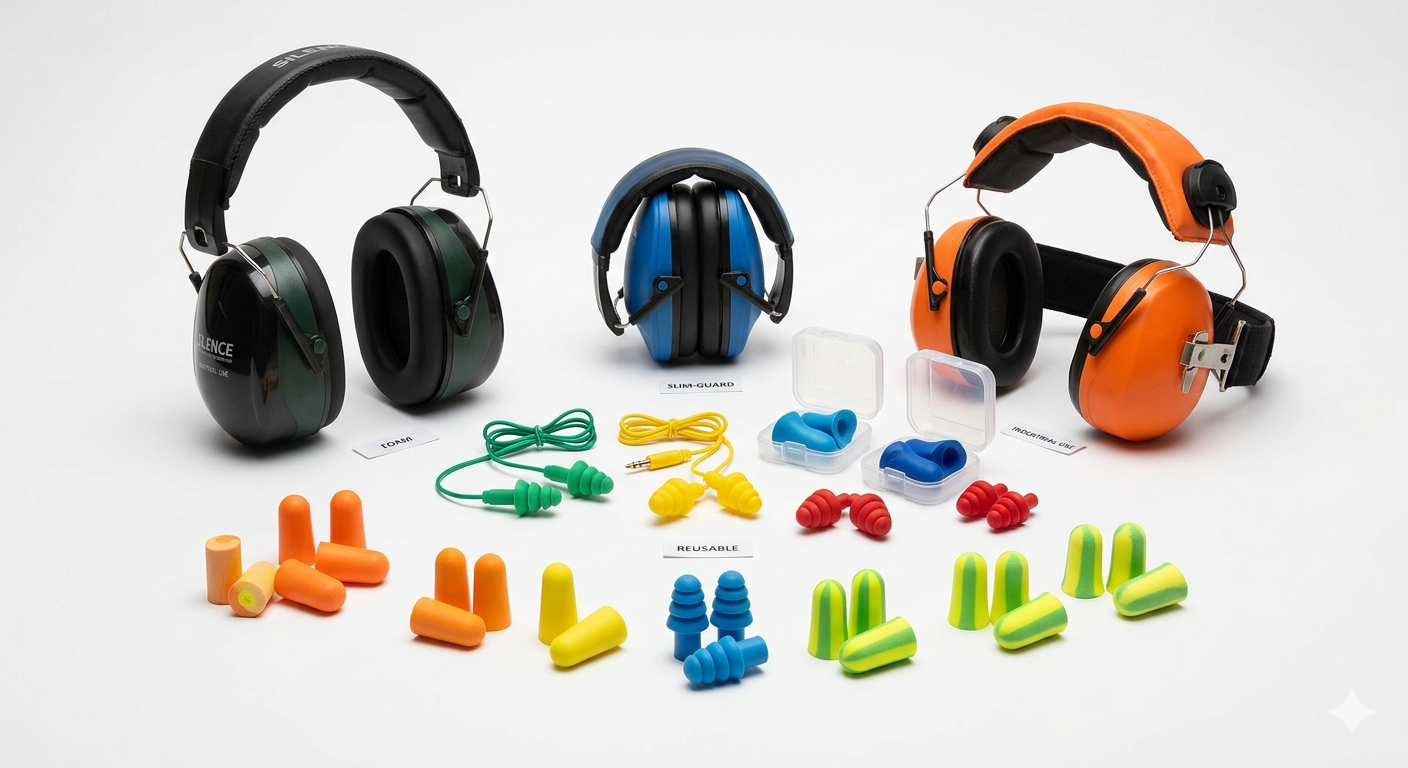
Employers must provide hearing protectors at no cost to all employees exposed at or above the 85 dBA action level. Employees exposed at or above the 90 dBA PEL must use hearing protection. California requires that hearing protectors attenuate noise exposure to at or below 85 dBA, or provide at least 5 dB of attenuation for employees who have experienced a standard threshold shift.
Employees must have a choice of at least one variety of plug and one variety of muff, and employers must ensure proper initial fitting and training.
Training (Section 5096)
Training must be provided annually to all employees exposed at or above the action level. Training must include:
- Effects of noise on hearing
- Purpose, advantages, disadvantages, and attenuation of various hearing protectors
- Instructions on selection, fitting, use, and care of hearing protectors
- Purpose and procedures of audiometric testing
- Explanation of standard threshold shift
Training must be updated when workplace changes affect noise exposure or when employee audiograms indicate hearing deterioration.
Recordkeeping (Section 5099)
Employers must retain noise exposure measurement records for two years and audiometric test records for the duration of employment. Employees and their designated representatives must have access to these records.
Conducting a Noise Survey
A professional noise survey typically involves two phases:
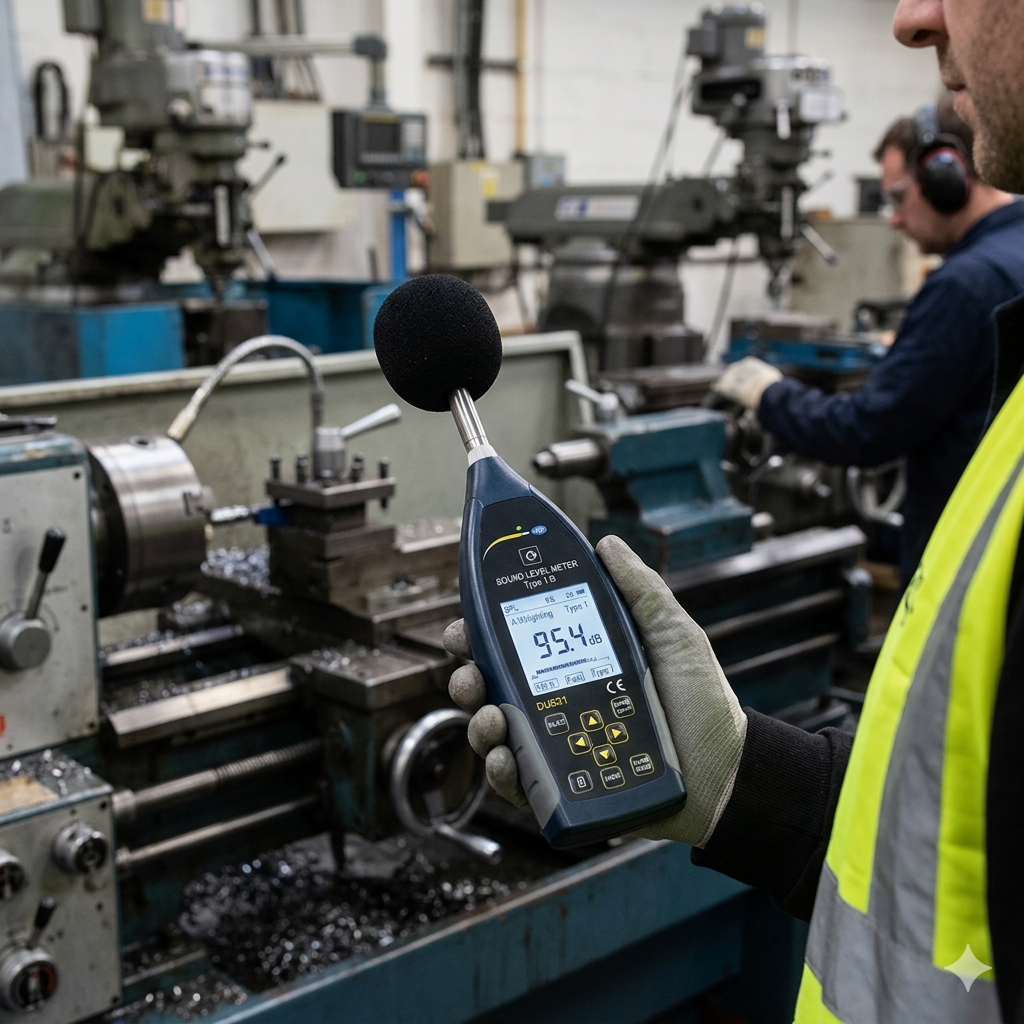
Area Sound Level Measurements – Initial walk-through measurements using calibrated sound level meters to identify high-noise areas and operations. This provides a preliminary overview but isn’t sufficient for determining individual employee exposures.
Personal Noise Dosimetry – This provides the definitive answer on employee exposure. Personal dosimeters are worn by employees during their entire shift, capturing all noise exposure including movement between areas, breaks, and task variation. The dosimeter calculates the 8-hour TWA and identifies peak exposures.
For facilities with consistent operations and minimal employee movement, area measurements combined with time-motion analysis may suffice. For variable operations—like military maintenance hangars where employees rotate between tasks and aircraft—personal dosimetry is essential.
Why “Just Wear Earplugs” Isn’t a Compliance Strategy
We frequently encounter facilities where employees wear hearing protection without any of the required program elements in place. This creates several problems:
No baseline data – Without audiometric testing before noise exposure begins, you cannot detect hearing loss that occurs on the job versus pre-existing conditions.
Improper protection – Without noise monitoring data, you cannot verify that hearing protection provides adequate attenuation for actual workplace exposures.
No documentation – Cal/OSHA citations during inspections when required program elements (monitoring, audiograms, training, records) are missing.
Liability exposure – Employees who develop occupational hearing loss can file workers’ compensation claims. Without documented program compliance, your defense is significantly weakened.
Cal/OSHA Sections 5095-5100 are specific and non-negotiable. Hearing protection alone—without the supporting program elements—does not constitute compliance.
Common Mistakes in Hearing Conservation Programs
After conducting hundreds of noise assessments across California manufacturing, aerospace, and military facilities, we’ve identified recurring compliance gaps:
Relying on Manufacturer Sound Ratings
Equipment manufacturers provide sound level specifications, but these rarely reflect actual workplace conditions. Installation, maintenance, surrounding equipment, and building acoustics all affect real-world noise levels. A professional noise assessment using actual measurements is required—manufacturer specs aren’t acceptable substitutes.
Not Accounting for Extended Shifts
California facilities operating 10- or 12-hour shifts often miss the adjusted action levels. A facility may believe 85 dBA compliance is sufficient, when their 12-hour shifts actually require program implementation at 82 dBA. This is a common citation during Cal/OSHA inspections.
Inadequate Noise Monitoring Documentation
Cal/OSHA requires documentation of noise monitoring methods, instruments used, calibration data, and employee exposures. Simple statements like “we measured noise levels” without supporting data won’t satisfy inspection requirements.
Missing Annual Training
Training isn’t a one-time event. Cal/OSHA requires annual refresher training for all enrolled employees, covering program updates and reinforcing proper hearing protection use.
No Follow-up When Standard Threshold Shifts Occur
When annual audiograms reveal a standard threshold shift, specific follow-up is required: refitting or replacing hearing protection, retraining the employee, and providing opportunity for otological examination. Many programs lack procedures for this critical element.
Frequently Asked Questions
Do I need a hearing conservation program if employees only wear hearing protection voluntarily?
If your noise assessment shows exposures below 85 dBA, employees can voluntarily wear hearing protection without triggering full program requirements. However, Cal/OSHA Section 5098(c) requires that you ensure voluntary use doesn’t create hazards (e.g., inability to hear warning signals) and that you provide certain information about proper use and care. Once exposures reach 85 dBA, the full program becomes mandatory regardless of whether protection is “voluntary.”
Can I use manufacturer equipment specifications instead of conducting a noise assessment?
No. Manufacturer specifications provide useful guidance but aren’t acceptable substitutes for actual workplace monitoring. Real-world noise levels depend on how equipment is installed, maintained, and operated—factors that vary significantly from manufacturer test conditions.
What if an employee refuses to wear hearing protection?
Employers can enforce hearing protection use as a condition of employment in designated areas. Document the requirement in your hearing conservation program, provide training, and apply progressive discipline for non-compliance. However, this doesn’t eliminate your obligation to attempt engineering and administrative controls.
How often must I conduct noise monitoring?
Initial noise assessments are required when operations begin or when workplace changes may affect noise exposures. Periodic re-monitoring is required “whenever there is a change in production, process, equipment, or controls that may result in new or increased exposures.” As a practical matter, facilities should re-assess every 2-3 years or whenever significant operational changes occur.
What if my facility has both high and low noise areas?
Employees who work exclusively in low-noise areas (below 85 dBA) don’t require hearing conservation program enrollment. However, employees who rotate between areas or spend any significant time in high-noise zones should undergo dosimetry to determine their actual 8-hour TWA exposure.
Can I conduct audiometric testing in-house?
You can conduct audiometric testing in-house if you have a qualified technician, calibrated audiometric equipment, and a suitable testing environment (quiet room meeting background noise requirements). Many facilities find it more practical to contract with mobile audiometric testing services.
How do I calculate the action level for 12-hour shifts?
Use the formula: Action Level = 85 – (5 × log₂(hours/8)). For 12-hour shifts: 85 – (5 × log₂(12/8)) = 85 – (5 × 0.585) = 85 – 2.92 = 82.1 dBA. Alternatively, use OSHA’s online calculator or noise dosimeters that automatically adjust for shift length.
Protect Your Workforce and Achieve Compliance
Hearing loss is permanent and irreversible. An effective hearing conservation program doesn’t just satisfy Cal/OSHA requirements—it prevents life-altering injuries that impact your employees long after they leave your facility.
EHS Analytical Solutions provides comprehensive noise surveys and hearing conservation services throughout California, serving manufacturing, aerospace, biotech, and military facilities in San Diego, Los Angeles, Orange County, the Bay Area, Sacramento, and beyond.
Our Certified Industrial Hygienists bring over 20 years of hands-on experience in noise assessment, program development, and Cal/OSHA compliance. We understand the unique challenges of California operations and provide practical, cost-effective solutions tailored to your specific industry and equipment.
Ready to conduct a workplace noise survey or develop your hearing conservation program? Contact EHS Analytical Solutions today.
EHS Analytical Solutions, Inc. 6755 Mira Mesa Blvd, Suite 123-249 San Diego, CA 92121 Phone: (619) 288-3094 Email: [email protected]
Visit our Industrial Hygiene Services page for more information about our noise assessment capabilities and comprehensive hearing conservation program development.
About EHS Analytical Solutions
EHS Analytical Solutions is a professional environmental health and safety consulting firm based in San Diego, California. Our Certified Industrial Hygienists (CIH) and Certified Safety Professionals (CSP) provide comprehensive workplace noise surveys, hearing conservation programs, industrial hygiene assessments, and Cal/OSHA compliance support to manufacturing, aerospace, biotech, and military facilities throughout California. We specialize in practical, industry-specific solutions that protect employee health while meeting regulatory requirements.